
Bible Study: The Death, Burial and Resurrection of Christ
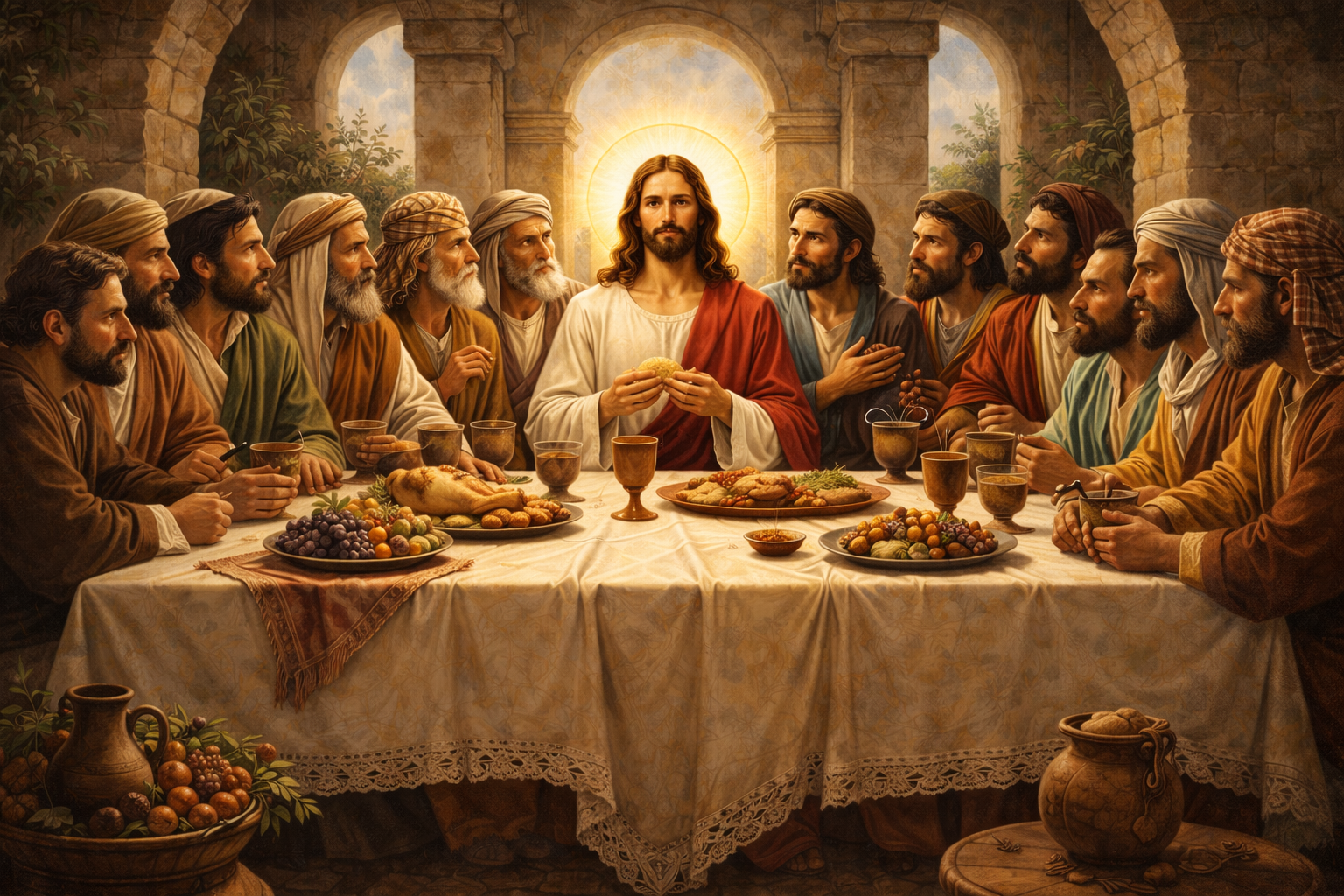
Did Christ really die, was He really buried, and did He really rise from the dead? Why does it matter so much? 1 Corinthians 15:3–8 and Isaiah 53:5–12.
1. Why this study matters
The death, burial, and resurrection of Christ are at the center of the Christian faith. Unlike others, Christianity does not stand mainly on moral teachings, good ideas, or church tradition. It stands on one central fact: Jesus Christ died, was buried, and rose again.
If those did not happen, Christianity would collapse. Paul said plainly that if Christ has not been raised, our faith is empty. But if it did happen, then everything changes: sin is dealt with, hope becomes real, salvation is secure, and believers can live differently now. This is why this subject is not optional for Christians. It is foundational.
Relevant scriptures: 1 Corinthians 15:14; Romans 10:9; 1 Peter 1:3
2. Did Christ really die?
a. Biblical evidence.
The Bible does not present Jesus as fainting, collapsing briefly, or appearing to die. It presents a real death. What the Bible says.As at the time Paul was writing 1 Corinthians some people who witnessed everything firsthand were still alive. James was Jesus’ younger brother and he documented his stories. [Matthew 27:35: Jesus was crucified publicly]; [Mark 15:37: Jesus cried out and gave up His spirit]; [John 19:33: Roman soldiers confirmed He was already dead]; [John 19:34: A soldier pierced His side, and blood and water came out]; and [Mark 15:44–45: Pilate himself confirmed the death before releasing the body].
This matters because Christianity teaches not just that Jesus suffered, but that He actually died. His death was the sacrifice.
b. Historical evidence.
Jesus Christ lived as a human being, born by a virgin in a physical location on earth, and everything about his death, burial and resurrection were documented while some people who witnessed it were still alive. Encyclopaedia Britannica notes that crucifixion was a major form of capital punishment in the ancient world and identifies Jesus as its most famous victim.
In Annals 15.44, Tacitus said that “Christus,” the founder of the Christian movement, suffered the death penalty during the reign of Tiberius under Pontius Pilate. That is significant because Tacitus was not a Christian and had no interest in promoting the faith. In Antiquities 20.9.1, Josephus refers to “the brother of Jesus who was called Christ, whose name was James…..”
Tacitus was a Non-christian, Roman historian, senator, orator, and public official.
Josephus was a Non-christian, Jewish priest, scholar, military leader, and historian, and wrote major works including The Jewish War and Antiquities of the Jews.
c. Why His death was necessary.
The purpose of His death was to deal with sin, guilt, judgment, and separation from God. He died for the sins of all humanity. [1 Corinthians 15:3; Romans 5:8; 2 Corinthians 5:21; 1 Peter 2:24]
The death of Christ means: sin is dealt with; justice is satisfied; forgiveness is available, and reconciliation with God becomes possible. Without His death, there is no payment for sin.
3. Was Christ really buried?
a. Biblical evidence.
The burial of Jesus is a core part of the Gospel, not a minor detail.
What the Bible says. [Matthew 27:57–58: Joseph of Arimathea asked for Jesus’ body]; [Luke 23:53: Jesus was wrapped and laid in a tomb]; [Matthew 27:59–61: The tomb location was known]; [Mark 15:46: A stone was rolled over the entrance]; [Matthew 27:65–66: Guards were set and the tomb was secured].
The burial matters because it confirms that Jesus really died.
b. Historical evidence.
The below are amongst several other pieces of evidence.
(i) The burial tradition names a specific person:Joseph of Arimathea. EncyclopaediaBritannica summarizes that tradition directly and notes Joseph is presented as a public figure - member of the council.
(ii) The burial is in the earliest Christian proclamation. The earliest summary of the 4 independent Gospels already include this sequence: Christ died, was buried, and was raised.
(iii) Jewish custom strongly favored burial before sunset. This is where Jewish sources become very important. Josephus reports that Jews were careful about burial, even in harsh circumstances, and a modern historical reconstruction article specifically points to Josephus, Jewish War 4.317, as evidence that crucified persons could be taken down and buried before sunset.
c. Why His burial matters spiritually.
His burial shows that His death was complete. It also points to the fact that the old life under sin was brought to an end. [Romans 6:3–4; Colossians 2:12]. For believers, burial speaks of: the end of the old record; the end of condemnation; the breaking of old identity; and the start of a new life in Christ. In simple terms: what Christ took to the grave was not meant to keep ruling your life.
4. Did Christ really rise from the dead?
a. Biblical evidence.
What the Bible says. [Luke 24:1–6: The tomb was found empty]; [John 20:14–18: Jesus appeared to Mary Magdalene]; [Luke 24:36–43: Jesus appeared to the disciples]; [John 20:26–29: Thomas was invited to examine Him].
b. Historical.
Historically, the resurrection is supported by the empty tomb tradition, the early witness list in 1 Corinthians 15, the transformation of the disciples, and the conversions of figures like Paul. These facts do not remove faith, but they show that Christian faith is rooted in serious historical facts.
(i) The resurrection claim is extremely early. The most important historical evidence is 1 Corinthians 15:3–8. Cambridge’s discussion of the pre-Pauline formula and Britannica’s treatment of 1 Corinthians both support the point that this resurrection tradition is very early.
(ii) Appearances to named people and groups. Paul says the risen Jesus appeared to Cephas, the Twelve, more than 500 people at once, James, all the apostles, and finally Paul. Historically, that is important because the claim was tied to identifiable witnesses, not to anonymous rumor.
(iii) Non-Christian sources: do not directly prove the resurrection the way the New Testament claims it, but they do help establish the historical setting: Jesus lived, was executed, and quickly became the center of a movement that spread widely. Tacitus confirms the execution under Pilate, and Josephus refers to Jesus in Antiquities and calls Him the “so-called Christ” in Book XX.
Also worth noticing:
the resurrection preaching started very early (within 10-years), not centuries later
the disciples changed from fearful people into bold witnesses
the message centered on a risen Christ, not just a dead teacher
the tomb story was public, not hidden in a corner
c. Why the resurrection matters.
The resurrection proves that Jesus is truly who He said He is, that His sacrifice was accepted, that death has been defeated, that believers have living hope, and that our faith is real and not in vain. [Rom. 4:25, 8:11; 1 Pet. 1:3; 1 Cor. 15:17–20].
The main purpose of His resurrection was to declare His victory, secure our justification, and release new life.
5. Discussion Points
Bridging Isaiah 53 to Christ’s death, burial, and resurrection. Isaiah 53 is one of the clearest prophetic bridges in the Bible. It helps believers understand not only that Christ suffered, but why He suffered.
What does Isaiah 53:5 “The punishment for our wellbeing fell on Him” mean in practical daily life for a believer today?
If all these are true, why do Christians still suffer?
If Christ died, was buried, and rose again, how should that change the way Christians face guilt, fear, suffering, and death?